Giving Thanks (Part 1 of 2)
Ministries > Truth For Life with Alistair Begg
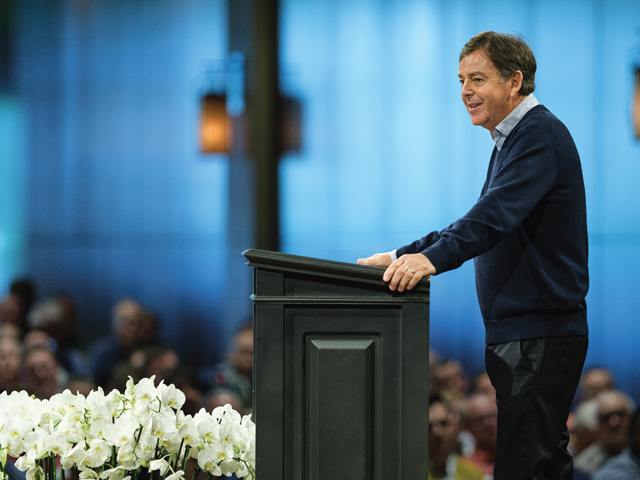
 Whether you celebrate Thanksgiving as a national holiday or not, the apostle Paul provided clear instructions for how believers are to express gratitude. On Truth For Life, Alistair Begg walks us through when we’re to give thanks, for what, and to whom.
-----------------------------------------
• Click here and look for "FROM THE SERMON" to stream or read the full message.
• This program is part of the special sermon ‘Giving Thanks’
• Learn more about our current resource, request your copy with a donation of any amount.
Helpful Resources
- Learn about God's salvation plan
- Read our most recent articles
- Subscribe to our daily devotional
Follow Us
YouTube | Instagram | Facebook | X
This listener-funded program features the clear, relevant Bible teaching of Alistair Begg. Today’s program and nearly 3,000 messages can be streamed and shared for free at tfl.org thanks to the generous giving from monthly donors called Truthpartners. Learn more about this Gospel-sharing team or become one today. Thanks for listening to Truth For Life!
Bob Lepine: Welcome to Truth For Life. If you live in the United States, let me begin by wishing you and your family a very blessed Thanksgiving. We pray this will be a special day of fellowship for you with friends and family as you give thanks for all God has done in your life. And whether you celebrate Thanksgiving as a national holiday or not, the Apostle Paul provides clear instruction for all of us on how we are to express gratitude. On today’s program, Alistair Begg walks us through when we are to give thanks, for what, and to whom.
Alistair Begg: I invite you to turn with me as I read from Psalm 30, the thirtieth Psalm, and then we’ll turn from there to Ephesians chapter 5. Psalm 30, and then we'll turn to Ephesians 5. A Psalm of David, a song at the dedication of the temple. I will extol you, O Lord, for you have drawn me up and have not let my foes rejoice over me. O Lord my God, I cried to you for help, and you have healed me. O Lord, you have brought up my soul from Sheol. You restored me to life from among those who go down to the pit. Sing praises to the Lord, O you his saints, and give thanks to his holy name. For his anger is but for a moment, and his favor is for a lifetime. Weeping may tarry for the night, but joy comes with the morning. As for me, I said in my prosperity, I shall never be moved. By your favor, O Lord, you made my mountains stand strong. You hid your face. I was dismayed. To you, O Lord, I cry, and to the Lord I plead for mercy. What profit is there in my death if I go down to the pit? Will the dust praise you? Will it tell of your faithfulness? Hear, O Lord, and be merciful to me, O Lord, be my helper. You have turned for me my mourning into dancing. You have loosed my sackcloth and clothed me with gladness, that my glory may sing your praise and not be silent. O Lord my God, I will give thanks to you forever. Thanks be to God for his Word. And then, as we turn to our studies in Ephesians 5, we pause and pray. Oh, gracious God, you know every one of us here now. you know our thinking, our background, where we stand in relationship to the things of yourself, revealed fully and finally in Jesus. And we pray for your help, that as we turn to the Bible, that you will bring it home to our hearts and minds with clarity and with compassion, with conviction, and with saving power. For we pray in Jesus' name. Amen. Well, in our ongoing studies in Ephesians, we have arrived appropriately, but without planning, at the twentieth verse here of the fifth chapter: “Giving thanks always and for everything to God the Father in the name of our Lord Jesus Christ. If we had been simply looking through our Bibles for a verse that we might employ on the Sunday following our Thanksgiving celebrations, we might equally have arrived just at this verse. So we're very thankful that in the course of our studies we find ourselves here. Because this verse comes in that context, I want to say two things by way of introduction, one concerning context, and the other an important contrast. The context, the immediate context of verse 20, is obviously the surrounding verses. And in the surrounding verses, Paul has urged the readers of his letter to be filled with the Holy Spirit, to have an ongoing infilling of God the Spirit, and for that then to reveal itself in the way in which they worship and praise God, so that their songs and their thanksgivings will be expressive of God’s invasion in their lives. And when he urges the same thing in writing to the Colossians, he issues there a threefold call to thankfulness. In doing so, Paul is simply acting as you would expect a Jewish man to act, one who had discovered that the psalms that he sang as a boy were often calls to thankfulness, so that he would have sung the thirtieth psalm, which we read, Sing praises to the Lord, you his saints, and give thanks to his holy name. Or in Psalm 107, O give thanks to the Lord, for he is good. Let the redeemed of the Lord say so.” So what Paul is doing is urging these believers in Ephesus, who have been brought out of a background in which their celebrations were anything but marked by tranquility and gratitude and godliness, and he's saying to them, “You know, when you come together as a group, your gatherings should convey gratitude. There should be, if you like, a sort of corporate attitude of gratitude. There should be a sort of enthusiastic thankfulness that is almost tangible amongst the people of God when they gather. And there is something of a challenge in that, isn't there? Even as we think about ourselves making our way this morning, I don't know what your attitude of heart was when you awakened or when you traveled or when you arrived, or even now, for that matter. But I wonder, if people were to come in, would they be struck by a sort of exuberant thankfulness, by the fact that people said, you know, these people seem to be remarkably thankful. That's what Paul is saying. And that context is then set in the contrast between what their lives once were and what they have now become in Christ. Paul is very, very clear in all of his writings to distinguish between humanity without God and humanity having come to know God in and through the Lord Jesus. So, for example, when he gives lists, as he often does, you will often find that thanklessness or ingratitude is embedded in those lists as an evidence of the fact that people do not appreciate who God is or what he's done. That doesn't mean that no one other than a Christian can be thankful. Clearly, that is not the case. But it is both the basis of thankfulness and the nature of it and the extent of it that is being addressed. So, for example, when writing to Timothy, describing humanity without God, he begins and he says, people will be, number one, filautos, that is, they will be lovers of themselves, self-love. They will be filarjon, they will be lovers of money. They will be lovers of pleasure rather than lovers of God. In other words, he says the sort of general tenor of a culture will be stuck on itself. And when that is the case, when people are convinced about the nature of the autonomous self, who I am, what I am, what I'm becoming, what I've achieved, and so on, then pride will stand as a barrier to genuine thankfulness. Then we will find ourselves saying, “Well, I deserve this. Someone gave me a gift or was kind to me,” and say, “Well, what of it? I deserve this.” Or we may even be worse. We may say, “I deserve more than this. That’s all they gave me? Wow. I thought I would have got more.” Humility dethrones the self and opens the door to thankfulness. You take the Old Testament picture of Nebuchadnezzar, who was sort of like the daddy of self-absorption, and the amazing picture of him sitting there in Babylon and saying to himself, you know, this is really fantastic. I have done a terrific job. And it's recorded in Daniel, he says, Is not this great Babylon, which I have built by my mighty power for the glory of my majesty. I, me, and mine. And then something radical happens to him. God intervenes, shows him what he's really like, turns him upside down, and everything is changed. And he returns to his place, and he surveys things, and he issues an edict to the land, and he declares his dominion is an everlasting dominion, and he does according to his will. So you see, this is the great contrast. I, me, mine, self-sufficiency, can get by okay. It's nice to be thankful every so often, nice to have that once a year and so on, but generally I've got it under control, as opposed to it's his dominion. So, the corporate thankfulness is to be expressed, and the contrast is with the ingratitude of those who do not know and love God. Now, with that said, we come to our verse, verse 20, where in the matter of a few words, Paul explains when, for what, and to whom, and how a man or a woman in Christ is to be thankful. You say, “That’s quite a lot.” Well, it is quite a lot, but we'll move through it speedily. So, four simple questions concerning thankfulness. Giving thanks, when? Answer, always. Always. Everybody can understand that. They know the difference between always and for a few days or once a week. Children are told, I want you to brush your teeth. When? I'd like you to do it every morning. Oh, do you mean we have to do it always? Yes, always. We can't just do it once a month? No, it would not be a good idea. Always. That's what he's saying. Everybody can understand that. Giving thanks to God always. So that's comprehensive. So we can understand why that would be the case when everything is going well, when we're enjoying the sunshine, when blessing and comfort appear to be our portion, when our health is in relatively good order, and when none of our family are in jail or in long-stay hospital situations. When we're enjoying seasons of blessing, when we are comforted, when we're aware of the wonder of God in creation, in his preservation of our lives, and of his inestimable love in the Lord Jesus, providing redemption for those who admit their sin. We could tick all of those boxes. I find that very easy. But you see, the always covers the downside too. The always covers the dark side. Always. Even when the wind is in our face. Even when the wheels fall off. Even when, as the hymn writer puts it, sorrows like sea billows roll. Yes, always. Paul, when he writes to the Romans, he reminds them in the fifteenth chapter that everything that has been written before, referring to the prior scriptures, has been written, he says, so that through endurance and the encouragement of the scriptures, we might have hope. In other words, as we read of God’s dealings in the past, it assures us in the present and gives us hope for the future. And one of the ways in which we do that is just by reflecting on the way in which God has dealt with individuals, normal men and women, as it were, in times past. So, for example, when you think about always giving thanks to God, let’s go back to Daniel and to chapter 6. Here is Daniel. He is separated from his family, along with some of his friends. He’s taken away into Babylon. He’s in captivity. He's sequestered. He no longer has access to the things that were his lot and his expectation in life. He's risen to a position of usefulness. God has blessed him, but now he finds himself opposed by everyone around him and by the plotting of evil men. And he is facing the lion's den. And what do we read? We read that he went down to his house, he got down on his knees, and he gave thanks, as he had done previously. Well, you see, that's quite striking. It's not particularly striking if he gave thanks when he was given a new position of authority in the government. People would say, well, that's really straightforward. I can see why he would do that. But now he faces the prospect of being ripped apart by lions. And he got down on his knees, and he gave thanks, as he had done previously. Or what about Jonah, who got himself in a whale of a problem, finds himself in the belly of a great fish, and out of the belly of the fish he says, “But I, with the voice of thanksgiving, will sacrifice to you.” Thanksgiving in the prospect of the lion’s den, thanksgiving in the most uncomfortable of circumstances, and equally so in the life of Paul himself. You remember Luke records how Paul and Silas are taken, and they are imprisoned, their feet are fastened in the stocks, but not until they've had a really good beating. So they've been beaten, and then they have been shackled. And Luke records that they caused a major stir in the jail, not by their complaining, but by their singing. And it says, “At midnight they were praying and singing hymns to God.” In other words, Paul, when he writes to the Ephesians, “I want you to be thanking God always,” we might say reverently, he knows what he’s talking about. Because that’s actually been his MO, no matter whether it was up or whether it was down. And the striking thing in each instance, whether in the Old Testament or here in the New with Paul, is that contentment in each of these individuals’ lives was a contentment that seemed to be able to manage changing conditions and circumstances. In other words, they didn’t key or cue their thankfulness from the upside of the circumstance or the nature of the condition. They didn’t see the conditions as an end in themselves, but rather they saw them as being part of the overall purpose of God to bring to completion his good work begun in them. So when we ask the question when, the answer that is given in the text is always. When we ask the question for what?” the answer is equally clear. For what shall we give thanks? For everything. Or, in another translation, for all things. For all things. That means the good, the bad, and the ugly, of which each of us can speak with some honesty and conviction. Paul has begun the letter, as we saw a long, long time ago when we began, by reminding his readers of God’s amazing grace, reminding them that they have been chosen and adopted and redeemed and forgiven and seated in the heavenly places and created for good works and so on. And all of this is the work of God the Father of our Lord Jesus Christ. Now you say, well, of course it is. No, no, don't just go so quickly there. What Paul is speaking about here when he's talking about giving thanks, as we will see in just a moment, is not giving thanks to ourselves. It's not giving thanks to a concept. It's not giving thanks to a sort of philosophical notion, but giving thanks to the God and Father who has provided for us, who is completely unlike us, who is wonderfully kind to us, who speaks through the prophet Isaiah and says, “For as the heavens are higher than the earth, so are my ways higher than your ways and my thoughts than your thoughts.” So we need to recognize that when the call here is for all things, we are confronted by the mystery of the purposes of God, a God who actually controls the universe, who stands outside of time. As I was reviewing my notes last night before I went to bed, I was reminded again, and I've told you this a hundred times, but it's locked so firmly in my mind, in that one-woman play that was on Broadway years ago featuring Lily Tomlin. And at one point in the play, where she talks about her anxieties and her fears and her terrors, she has that great line where she says, “I worry about my place in the cosmic scheme of things.” And then she stops and she says, “I worry that there is no cosmic scheme of things.” Now, what Paul is telling us here is that there is a cosmic scheme of things, and that God, who controls the universe, is the heavenly Father to all who will trust in him. He's the heavenly Father to all who will trust in him. He is Father of all by creation, but he's not our heavenly Father except as we come to trust in him through his Son, the Lord Jesus Christ. It's very important we understand that, because then we can respond to the Bible as those who have come to know God in that way through Jesus, so that when we read, for example, Jesus' words to his disciples and he says to them, you know, the God who feeds the birds of the air, whose care extends to the sparrows, is your heavenly Father, and you can trust him. You can trust him in all things. Because remember, Romans 8:28, for we know that in all things God works for the good of those who love him, who have been called according to his purpose. You see, God is the one who provides for us all that we need. All that we need. The notion of the doctrine of providence is fundamental to a thankful heart. Providence, the origin of providence, if you like, in terms of the biblical record, is when, in the story of Abraham and Isaac, Isaac is going with his father to the place of sacrifice, and he asks, “We’ve got everything except a lamb for the sacrifice.” And you remember the response is, “God himself will provide a lamb.” And when we read through the pages of Scripture, we realize that the story of God is the story of his provision. And what that means in the life of the individual who trusts him is vitally important. So, for example, in the Catechism, in question 26, asking about the nature of providence, the reply in part is this. Here's the implication: I do not doubt that God will provide whatever I need for body and soul, and that he will turn to my good whatever adversity he sends me in this sad world. He's able to do this because he's Almighty God. He desires to do this because he is my Heavenly Father. Thankful to whom? To Almighty God. Thankful to whom? To the God who is my Heavenly Father. Therefore, I can learn to be patient when things go against me. I can learn to be thankful when things go well, not only in my own life, but in the lives of others whom I might otherwise find myself being jealous of. I can be confident in the face of the future, and I can be secure in coming to terms with my past. Do you know how often I spend time with individuals who don't realize that they have a heavenly Father, who don't realize Psalm 139, that God intricately wrought them in their mother’s womb, that a loving heavenly Father has shaped their, therefore shaped your life, physically, psychologically, temperamentally, in order to make you the person that you are. Of course, if you want to believe that you were born without reason, that you prolong yourself by chance, and that you die and go into oblivion, then I can't help you, except to ask you to consider the fact that the evidence points to this God who is intricately involved in the world and to whom we owe thankfulness and gratitude always and for all things.
Bob Lepine: You're listening to Alistair Begg on Truth For Life, and we'll hear more about giving thanks tomorrow. We want you to know we are grateful for you. We appreciate your support and your prayers, and that you study along with us and share Alistair's teaching with others. Here at Truth For Life, listeners often write to us to tell us how God is using this ministry in their lives, and today I want to share a letter we received recently. A listener wrote and said, I am thankful for your program accompanying me on all the long early morning drives to work before the sun was up. Your messages on the radio got me through the day. They set the tone and put me in a good mood. Anytime things would go south, I would just ponder your words and reflect on the stories you so eloquently told. Back in the day, I listened to things that made me anxious. I'd find myself irritated easily, but when I finally came to the Lord and started listening to Truth For Life, the anxiety melted away and the peace came over me that lasted all day long. It was Jesus. He radically transformed me, but he worked through you. So again, thank you. Thank you for pouring into people's lives from thousands of miles away. We're so encouraged when we get letters from listeners like this, and since Truth For Life is 100% funded from listener donations, If you are one of our supporters, the thanks belong to you. It's your giving that makes it possible for us to produce and distribute Alistair's teaching so that God continues to use Truth For Life to transform the lives of so many. So thank you. Our offices are closed today and tomorrow so we can celebrate Thanksgiving with our families. We'll be back in the office on Monday, November 30th. I'm Bob Lepine, wishing you a happy Thanksgiving. Join us tomorrow when we'll consider what God is able to do for his children that no earthly father can do. The Bible teaching of Alistair Begg is furnished by Truth For Life, where the learning is for living.
Related Episodes
Giving Thanks (Part 2 of 2)
Friday, November 27
Standing Firm in the Grace of God (Part 2 of 2)
Wednesday, November 25
Standing Firm in the Grace of God (Part 1 of 2)
Tuesday, November 24
About Truth For Life
Truth For Life distributes the unique, expositional Bible teaching of Alistair Begg. Studying God’s Word each day, verse by verse, is the hallmark of this ministry. In a desire to share the good news of the Gospel without cost as a barrier, the entire teaching archive is available for free download and resources are available at cost with no markup.
About Alistair Begg
Alistair Begg has been in pastoral ministry since 1975. Following graduation from The London School of Theology, he served eight years in Scotland at both Charlotte Chapel in Edinburgh and Hamilton Baptist Church. In 1983, he became the senior pastor at Parkside Church near Cleveland, Ohio. He has written several books and is heard daily and weekly on the radio program, Truth For Life. The teaching on Truth For Life stems from the week by week Bible teaching at Parkside Church. He and his wife, Susan, were married in 1975 and they have three grown children.Contact Truth For Life with Alistair Begg
Website
http://www.truthforlife.org/?utm_source=oneplace&utm_medium=sitelinks&utm_campaign=home
Mailing Address
Truth For Life
P.O. Box 398000
Cleveland OH 44139
Telephone (Customer Service)
888-588-7884 Domestic
400-543-6800 International
440-543-0522 ( Fax)